

What is peak flow in children?
Peak flow is how much air your child quickly breathes out when using the greatest effort. Your child can measure peak flow with a peak flow meter, an inexpensive device that can be used at home.
- If your child can breathe out quickly and with ease, your child has a higher peak flow. The number is higher on the peak flow meter. Your child's lungs are working well, and your child's asthma may not be bothersome.
- If your child can only breathe out slowly and with difficulty, your child has a lower peak flow. The number is lower on the peak flow meter. Your child's lungs aren't working well, even if there are no asthma symptoms.
Why measure your child's peak flow?
It's good to know how well your child's lungs are working. One way to do this is by checking your child's peak flow with a peak flow meter. The peak flow can tell you if your child's asthma is staying the same, getting better, or getting worse.
Checking peak flow helps your child control his or her asthma. Then asthma won't control your child.
How to measure your peak expiratory flow
When you have asthma, your doctor may want you to check how well your lungs are working. A peak flow meter is an easy tool you can use anywhere to do this. It measures how fast you breathe out when you force the air out of your lungs.
Measure your peak expiratory flow (PEF) regularly, even if you are feeling good. PEF is lowest in the early morning and highest in the afternoon. When you measure your PEF once a day, it needs to be done first thing in the morning before you use your asthma medicine.
- Remove any gum or food you may have in your mouth.
- Set the meter to its lowest number.
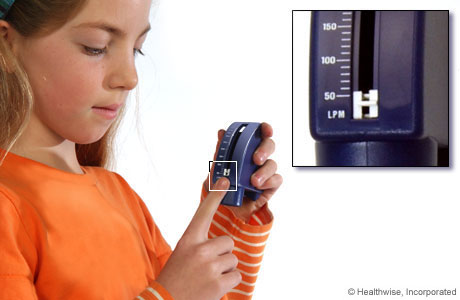
Put the pointer on the gauge of the peak flow meter to 0 or the lowest number on the meter. In the photo, this is about 50.
- Attach the mouthpiece.
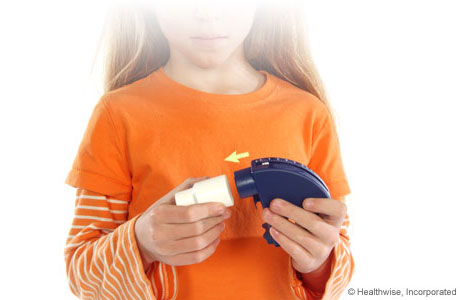
Attach the mouthpiece to the peak flow meter. Some meters don't have a separate mouthpiece.
- Take a deep breath.
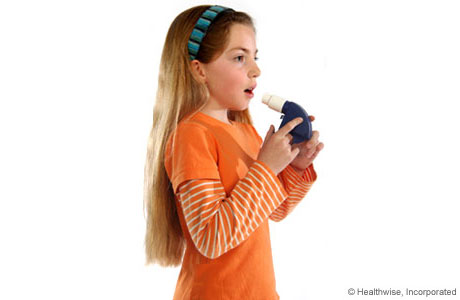
While standing, take a deep breath.
- Put the peak flow meter mouthpiece in your mouth.
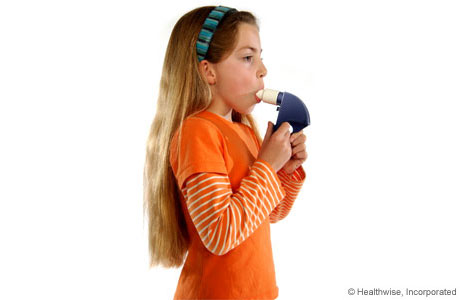
Close your lips tightly around the outside of the mouthpiece. Don't put your tongue inside the mouthpiece.
- Breathe out as hard and as fast as you can for 1 or 2 seconds.
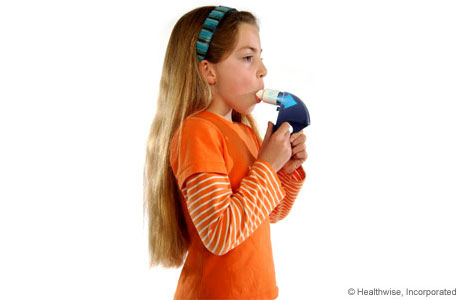
A hard and fast breath usually produces a "huff" sound.
- Check the number on the gauge, and write it down.
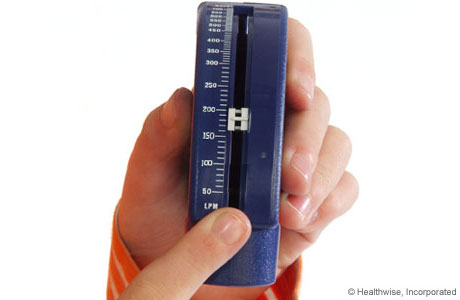
This is your peak expiratory flow (PEF). In the photo, the PEF is about 180.
- Repeat these steps 2 more times.
Take the highest number you received, and write it in your asthma diary or on another record sheet.
If you cough or make a mistake during the testing, do the test over.
When your peak flow number goes down, check your asthma action plan or call your doctor to see what you need to do to get your asthma back under control. Acting quickly can help you breathe better and may help keep you out of the emergency room.
How do you prepare for a peak flow test?
To perform the peak expiratory flow (PEF) test, you need a peak flow meter. A peak flow meter is an inexpensive handheld device you breathe into as hard and as fast as you can.
Read and follow the instructions included with the peak flow meter. Ask your doctor to show you how to use this device before you use it at home. If you have questions about how to use a peak flow meter or how to read the results, talk with your doctor.
If you use medicine to help with breathing (such as for asthma), talk to your doctor to learn how long you should wait to test your lung function after taking your medicine. You may need to wait a few hours after taking the medicine to do the test. Or your doctor may recommend that you test your lung function in the morning before you take your medicine.
Avoid eating a heavy meal before performing a PEF test. Be sure to sit up or stand up as straight as possible to help you take as large a breath as you can. Use the same position every time you test your PEF. Peak flow monitoring relies on your trying as hard as you can. For accurate results, be sure to give the test your best effort every time.
©2011-2026 Healthwise, Incorporated