
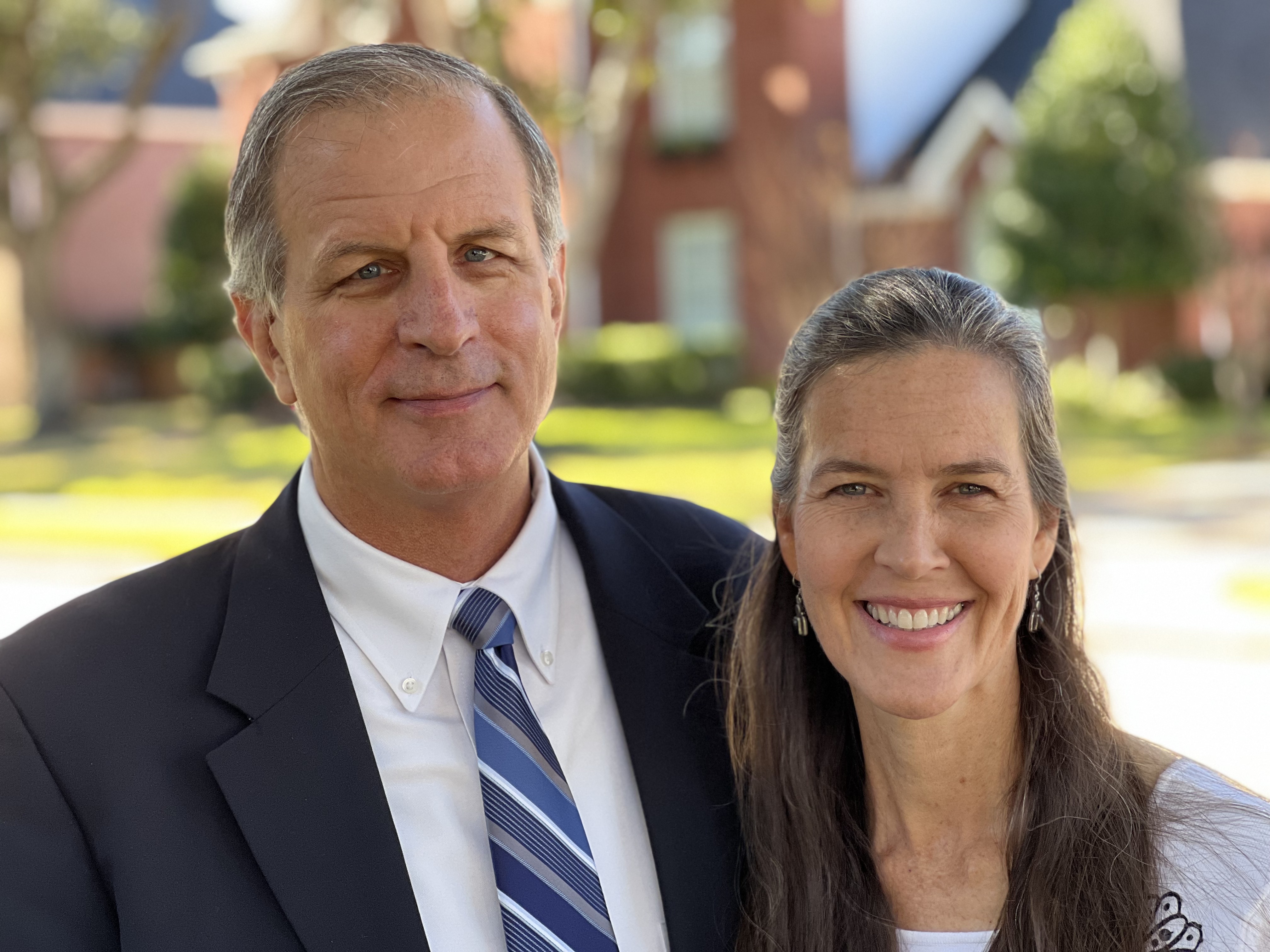
A rare genetic disorder claimed three family members, and always loomed in the background for David Frey, a marriage coach from Friendswood, Texas.
His mother and two brothers each died at age 49 from polycystic kidney disease (PKD), a rare disorder that causes fluid-filled cysts to form in the kidneys. His older brother, however, underwent a kidney transplant and is alive today.
Kidney Problems Start
As David approached his 49th birthday in 2013, he, too, began suffering dreaded kidney problems. “We were on vacation, and late one night, my wife Ingrid noticed that my feet and legs were really swollen,” David recalled. “I knew what it was. It was my body holding in fluid, rather than it being processed by my kidneys.”
After researching nephrologists in the Houston area, David made an appointment to see Christine Ann O'Mahony, MD, Abdominal Transplant Surgeon at Baylor St. Luke’s Medical Center and Associate Professor of Surgery at Baylor College of Medicine. Dr. O'Mahony successfully implanted a new kidney and discharged David, though she noted he may later develop polycystic liver disease (PLD), requiring a transplant.
Liver Issue Develop
Six years later, during the COVID pandemic, David’s liver “activated” and began showing signs of PLD. By the summer of 2025, his liver grew from just over 3 pounds to 45 pounds, causing extreme discomfort.
“Although I was muscular, my ribs stuck out. I just thought I had big ribs. It turns out my liver was starting to grow and pushing against my other organs,” he said. David’s right lower lung collapsed under the pressure. He had trouble breathing, moving and eating. “It pushes against your ribs almost to the point of breaking them, and that causes a lot of pain.”
David, then 61, returned to Baylor St. Luke’s, where Rise Stribling, MD, Medical Director of Liver Transplantation, and John Goss, MD, Medical Director of Transplantation, immediately recognized the urgency of David’s condition and began the transplant protocol and the search for a donor.
“Dr. Goss was so upbeat and confident,” David said. He told me it would not be a problem. My wife and I were just so grateful after that first interaction.”
Six weeks later, an organ became available, and Ingrid and David made the hour-long drive to Baylor St. Luke’s. The transplant team was ready and successfully implanted the organ in a seven-and-a-half-hour surgery. He was in the ICU for a week while the transplant team managed complications such as low blood count, dehydration, gastric pains and fever.
“They knew exactly what to do for each one of the issues,” David recalled. He spent 40 days in protective isolation, and his immune system strengthened. He will never have to worry about his polycystic disease again.
“By taking out his liver and transplanting a new one, his phenotype and genetic makeup changed,” Dr. Goss said. “He’s now completely cured of this disease. It will not recur in the liver, and it will not recur in the transplanted kidney that he already has. So his chance of living a long life is very good.”
Less than two months later, David is getting back to a more normal lifestyle, walking a mile and a half every day. “I never thought I would ever be able to do that again,” David said. He’s looking forward to lifting weights and playing pickleball with Ingrid.
Donors Save Lives
David says he feels an overwhelming sense of gratitude to those who register as organ donors and their families who agree to the donation. “They're the real heroes in this story,” David said. “I'm also grateful for the surgeons and the nurses. They're the heartbeat of the hospital. No one will ever know some of the sacrifices they go through.”
Dr. Goss acknowledged the tremendous team it takes to coordinate a successful organ transplant. “It's a huge team effort. The hospital has to have an infrastructure in place to perform a transplant, and it involves medical staff from multiple areas - anesthesia, pathology, nursing, laboratory medicine, to name a few." It’s really a team effort,” he said.
Managing PKD and PLD
Patients with a family history of PLK or PLD should undergo screenings. “Make sure your siblings and children are screened,” Dr. Goss advised.“And if they do have the disease, it needs to be monitored early on.”
Need a doctor? Use our Find a Doctor tool to search by specialty, location or condition.
Facilities and providers


For employees and providers
About CommonSpirit
- Our story
- Our leaders
- Investor resources
- News
- Health blog
- Careers We're hiring!