

Why is a Dix-Hallpike test for vertigo done?
The Dix-Hallpike test locates the cause of vertigo as either the inner ear or the brain. If the problem is in the ear, this test can determine which ear is affected.
Dix-Hallpike test for vertigo
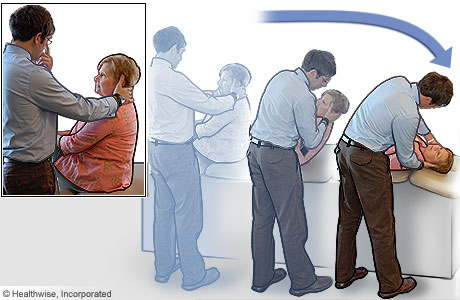
For this test, you are seated on an exam table. The doctor may ask you to look at their nose the whole time the test is done.
- The doctor first turns your head to one side and then lowers your head to the table.
- The doctor watches your eyes for nystagmus. Nystagmus is a rapid, rhythmic movement of the eyes.
- If you get dizzy and the doctor sees nystagmus, then the doctor knows that the ear pointed to the floor is the affected ear.
- If the doctor does not see nystagmus, the doctor repeats steps 1 and 2 on the other side to check your other ear.
- The doctor then helps you back to the upright position.
What do the results of a Dix-Hallpike test for vertigo mean?
A normal test result means that you did not have vertigo or nystagmus during the test.
An abnormal test result means that you had vertigo or nystagmus during the test. It is likely that the vertigo is caused by an inner ear or brain problem, depending on the way you reacted to the test.
©2011-2026 Healthwise, Incorporated
The content above contains general health information provided by Healthwise, Incorporated, and reviewed by its medical experts. This content should not replace the advice of your healthcare provider. Not all treatments or services described are offered as services by us. For recommended treatments, please consult your healthcare provider.