
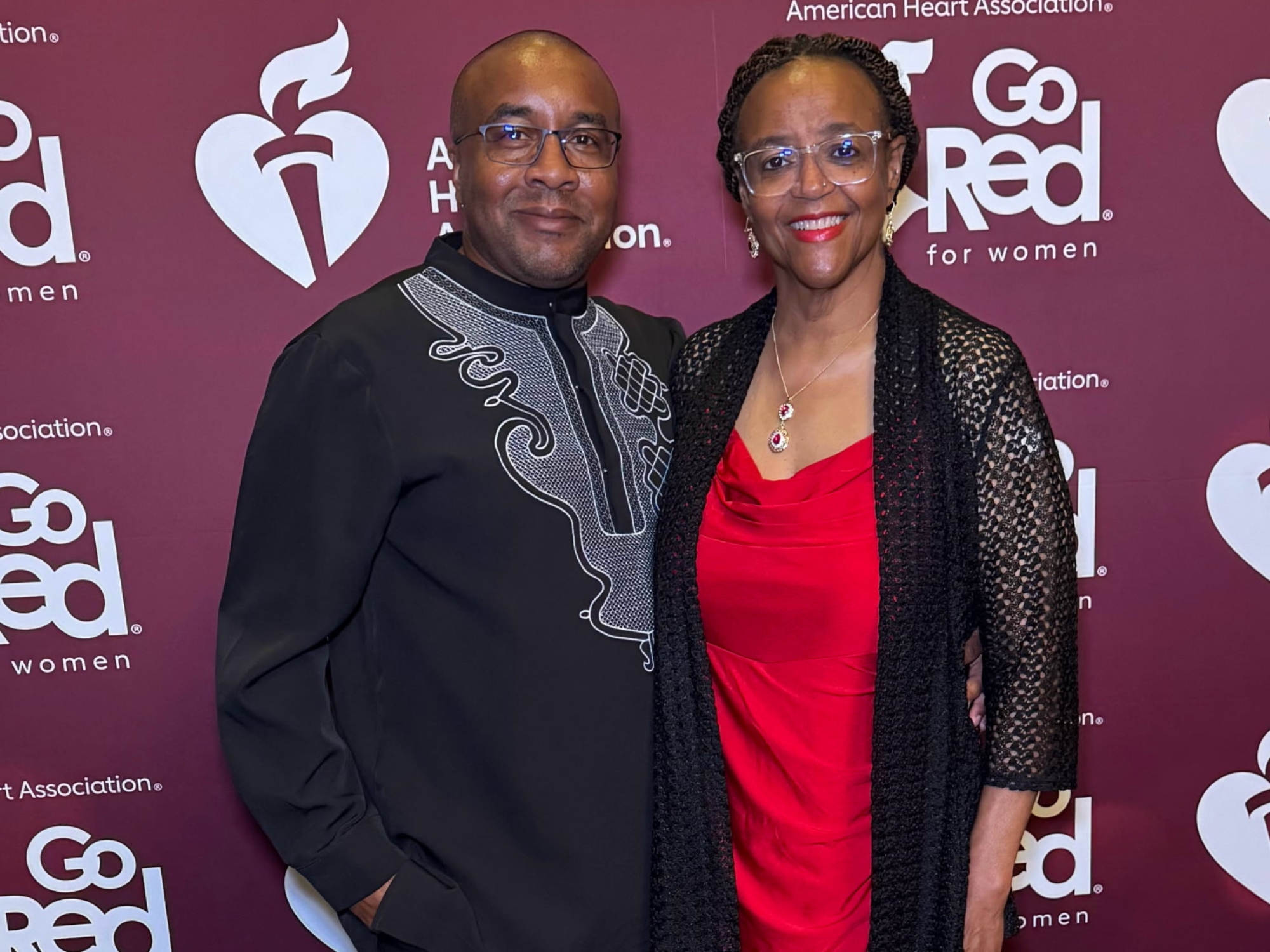
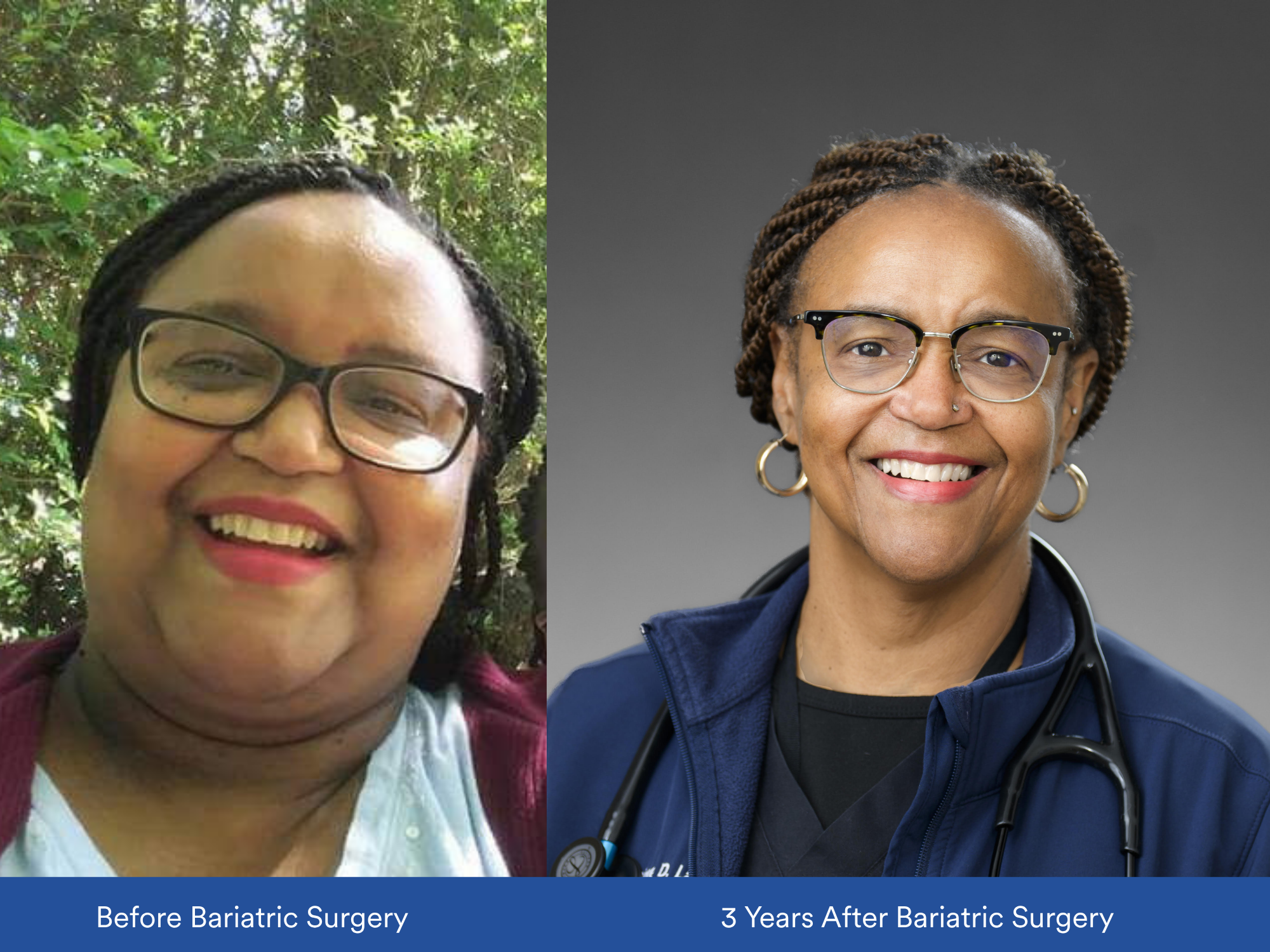
Just three years ago, Desiree D. Lacey, PhD, MPH, RRT, RCP, weighed nearly 250 pounds and was gradually losing her 25-year battle with Type 2 diabetes. Today, following bariatric surgery, she has maintained a 100-pound weight loss, eliminated the need for insulin and dropped her blood sugar to a healthy level.
Bariatric surgery reversed Desiree’s diabetes. It also gave her a new lease on life: she has regained energy and strength, gotten married and earned her PhD in Public Health.
A Life-Changing Decision
Desiree first began seriously considering bariatric surgery at the height of the COVID-19 pandemic. She had an A1C (blood sugar) level of 12, indicating extremely poor diabetes control. To manage her condition, she was taking 500 units of insulin per day, an exceptionally high dosage indicating severe insulin resistance. Not even 60 yet, Desiree had difficulty ascending stairs and functioning in her daily life. She knew it was time to consider bariatric surgery, and she knew exactly where she would want to have the procedure: St. Luke’s Health - Patients Medical Center.
“I wouldn’t go anywhere else,” she said. “After all, I work here, and I trust the people.”
As a cardiopulmonary manager at the hospital, Desiree had occasionally worked with Rizwan Chaudhry, MD, a general and bariatric surgeon, so she scheduled a consultation. By the end of the appointment, she was certain bariatric surgery was her next step. “He has a very kind, calm and reassuring demeanor,” Desiree said about Dr. Chaudhry. “I remember him smiling and saying, ‘We can get this weight off of you.’ And I believed him.”
A New Beginning with Sleeve Gastrectomy
In April 2023, Desiree underwent a sleeve gastrectomy. This minimally invasive procedure reshapes the stomach into a smaller, sleeve-like pouch, reducing food intake and removing the portion of the stomach that produces the hunger hormone, ghrelin. In under two hours, Desiree was on the road to a healthier life.
“The sleeve gastrectomy is a highly effective tool for patients like Desiree who are struggling with long-term weight management and associated comorbidities,” explained Dr. Chaudhry. “ By reducing the stomach’s capacity, we not only help patients consume less food but also impact ghrelin production, the hunger hormone, which is a major factor in sustained weight loss.”
He added, "Desiree's commitment to her post-operative care and lifestyle changes has been exemplary. Seeing her A1C drop from 12 to 5.5 and eliminate insulin is truly rewarding, and a fantastic example of the benefits this procedure can offer."
Recovery and Lasting Results
Over the next year, Desiree’s results were incredible:
Lost over 100 pounds
Successfully reversed her diabetes, eliminating the need for insulin
Improved her blood pressure and cholesterol levels, further reducing her medication needs.
Reducing certain medications resulted in significant cost savings and reduced side effects. But what mattered most to Desiree was her newfound health. “I feel healthier within myself – younger, even,” Desiree said. “I’d do it again in a heartbeat, and much sooner!”
Advocating for Weight-Loss Surgery
Desiree is now an enthusiastic advocate for bariatric surgery, sharing her story to encourage others.
“I remind people the weight didn’t come on in a day, and it’s not going to come off in a day. So you just have to kind of hang in there and… go through the process,” she said.
She acknowledges that financial concerns are valid, but advises those considering weight-loss surgery to discuss payment options and insurance questions with their physician. “Physicians will often work with their patients to find the most feasible financial options, so it’s important to go ahead and schedule a consultation to gather all the facts,” she said.
Benefits of Bariatric Surgery
Desiree Lacey's positive health outcome demonstrates how a proactive step toward health can lead to an improved quality of life overall. In fact, according to the American Society for Metabolic and Bariatric Surgery (ASMBS), bariatric surgery:
Leads to significant long-term weight loss
Resolves or improves comorbidities like type 2 diabetes, hypertension and sleep apnea in a large majority of patients
Is associated with increased long-term survival, reduced cardiovascular risk factors and reduced risk of certain cancers.
If you've been considering bariatric surgery, find a doctor to explore if it is the right path for you.
Find a qualified bariatric surgeon near you.
Facilities and providers


For employees and providers
About CommonSpirit
- Our story
- Our leaders
- Investor resources
- News
- Health blog
- Careers We're hiring!