
Collaboration Provides World-Class Lung Cancer Care — Close to Home
Cancer patients at St. Luke's Health - Brazosport Hospital can recover comfortably at home knowing that if needed, they have access to world-renowned oncology specialists at the Dan L Duncan Comprehensive Cancer Center in Houston, just an hour away.
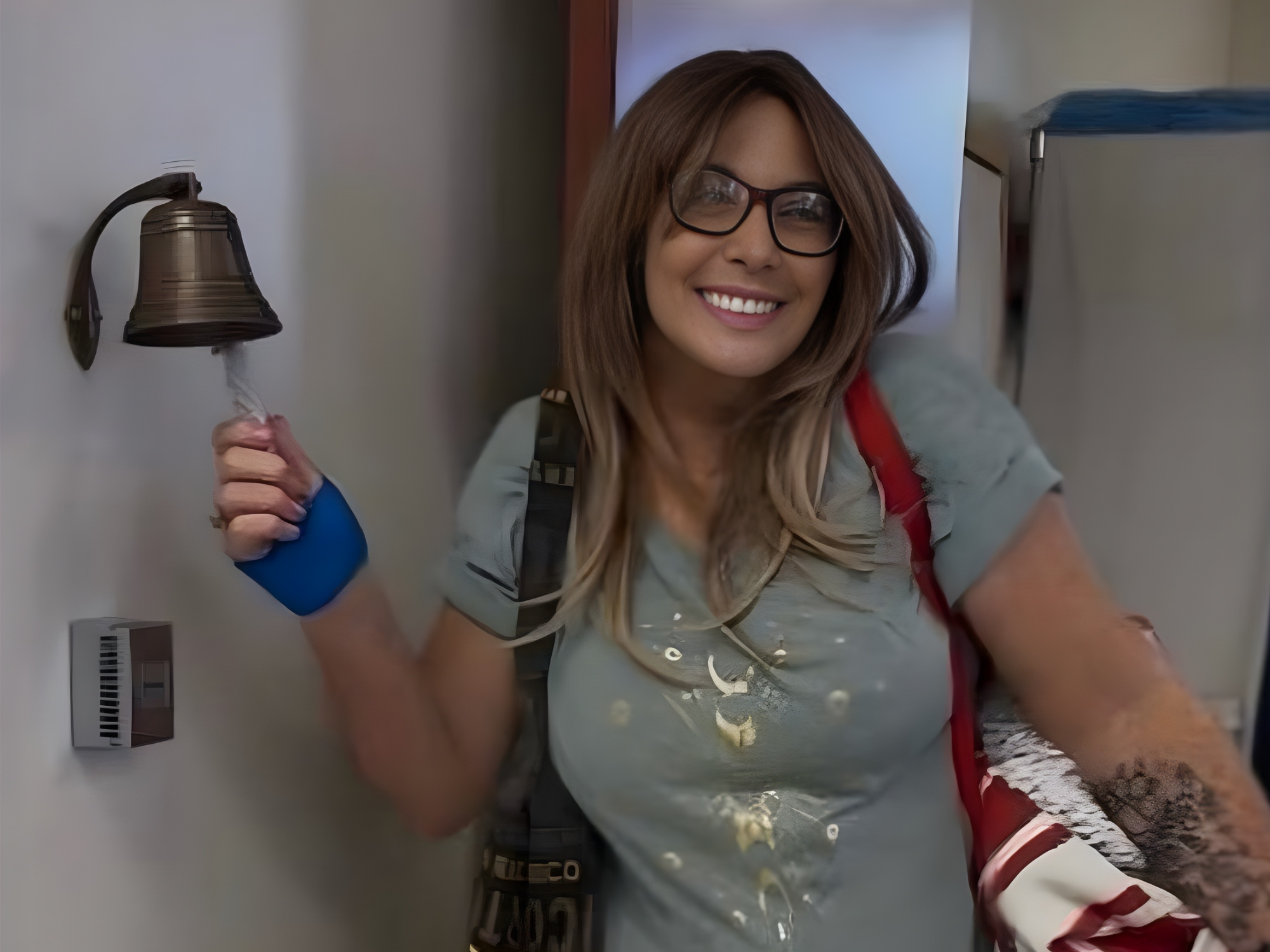
Anne Crabtree was the picture of good health - a master canine trainer who ran extreme obstacle courses for fun. As healthy as she thought she was, the 56-year-old from Angleton, Texas, couldn't shake a cold in December 2024. "It had been two weeks, and I was still coughing, short of breath and dragging," she recalled. Anne decided to go to an urgent care clinic to rule out pneumonia. An X-ray and CT scan showed a suspicious area in her lungs.
Anne saw Pulmonologist Sanjay K. Aggarwal, MD, and Oncologist Hamza Minhas, MD, both at the Cancer Center at St. Luke's Health - Brazosport Hospital. Thanks to the hospital’s longstanding partnership with Baylor College of Medicine, Dr. Minhas consulted with Cardiothoracic Surgeon Shanda Haley Blackmon, MD, MPH, at the world-renowned Dan L Duncan Comprehensive Cancer Center at Baylor Medical Center in Houston. Drs. Minhas and Blackmon worked together on a treatment strategy using the center's latest diagnostic and surgical tools and frequently presented Anne’s case to the center’s multidisciplinary thoracic tumor board.
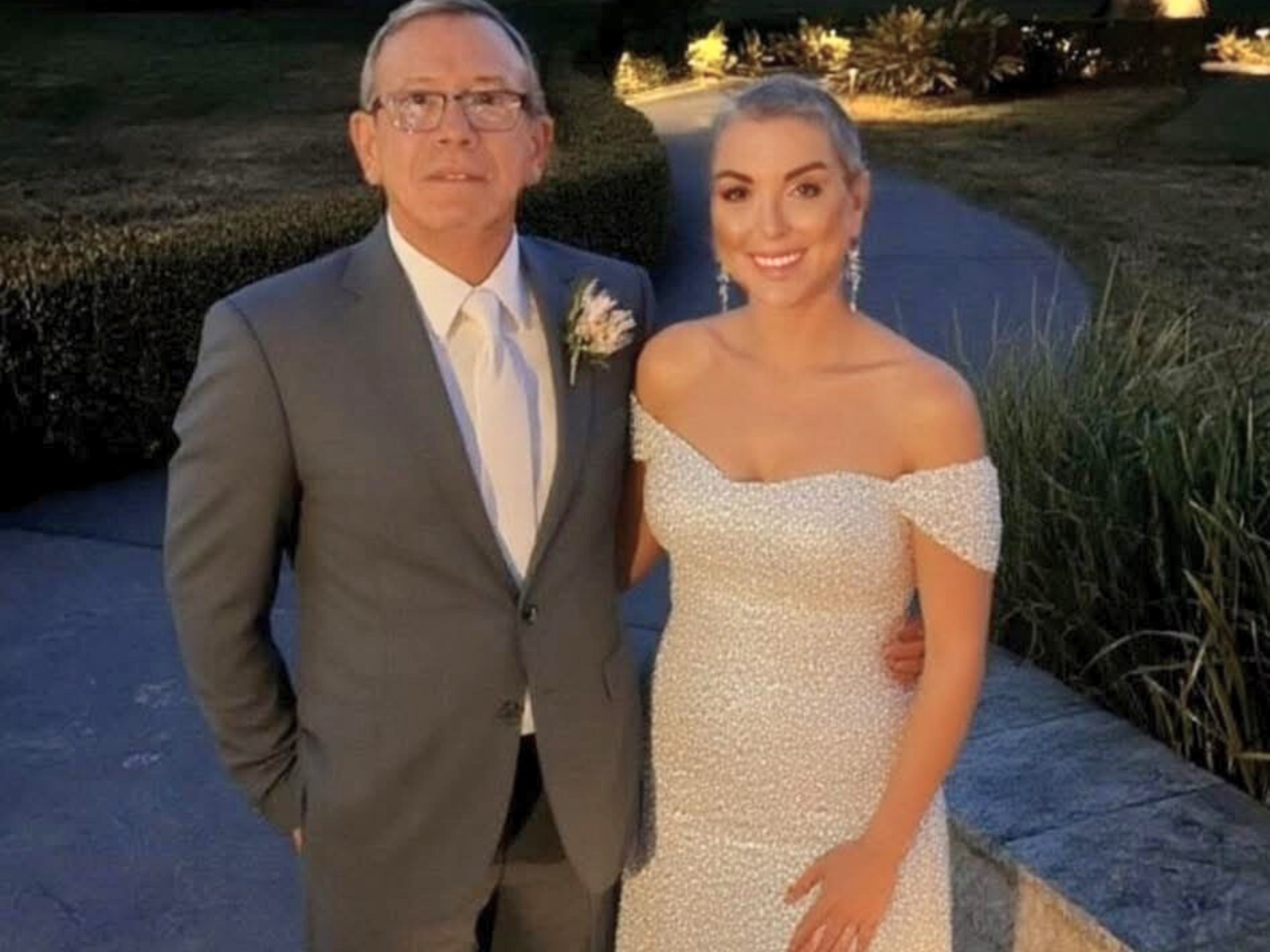
Anne and her husband celebrated their 38th wedding anniversary with a vow renewal.
From Common Cold to Critical Clue
Anne was stunned when her biopsy revealed Stage 3 lung cancer with lymph node involvement. "It was all very shocking," she recalled. "I'm a non-smoker. I never thought I was at risk. The year before, I ran a 13-mile Spartan extreme obstacle race with my two kids. I still rack my brain to figure out how I got lung cancer."
Anne’s oncology team prescribed a combination of chemotherapy and immunotherapy to shrink the tumor. It worked - the tumor shrank by 40%. In October 2025, Dr. Blackmon removed a 1cm lesion in Anne's right lung. “Ninety-five percent of our lung cancer surgeries are performed with a minimally invasive approach requiring 2-3 small incisions in the chest,” Dr. Blackmon explained, but in Anne’s case, one of the incisions was larger to allow for the extraction of one of the lymph nodes.
Four months post-surgery, Anne is cancer-free and will receive monthly infusions for a year to reduce the risk of recurrence.
“Our goal is to give the patient the ability to recover in their own home and to get them back home as quickly as possible after minimally invasive surgery,” Dr. Blackmon said. “Our other goal is to partner with the patient’s local medical oncologist so they can undergo their chemotherapy or radiation therapy, also close to home.”
Anne is grateful for the care she received from Drs. Minhas and Blackmon, which she described as “top of the line.” Their close collaboration put her at ease. “If Dr. Minhas had a question for Dr. Blackmon, he would call her during my appointment. They both gave me their cell numbers and wanted us all to be on the same page. I could not have asked for better care,” Anne said.
Dr. Minhas emphasized how patient involvement can positively impact outcomes. “Anne actively participated in her care, which is equally important as the treatment she received,” Dr. Minhas said. “She did everything right; she followed the protocols and instructions and was very communicative with us.”
A year and a half later, Anne is thankful for that initial emergency care visit that led to her cancer diagnosis. “Thank God I went to emergency care to get checked out,” Anne recalled. “I almost didn’t go.”

Oncologist Hamza Minhas, MD, with Anne at a follow-up appointment
The Importance of Early Detection
Dr. Blackmon said early detection is critical when treating lung cancer. “Even though the tumor was relatively small, it had already spread to the lymph nodes. Patients frequently don't experience symptoms until the cancer has already spread, or is too big or metastatic,” she said.
“The thing is,” Anne reflected, “whether you smoke cigarettes or not, nobody deserves to get cancer. My thinking was, ‘I'm not going to let this keep me down.’ I tried to do things to make me laugh, have the best attitude and be positive. I kept telling myself, ‘everything's going to be okay.’”
Lung Cancer Prevention
While smokers comprise about eighty percent of lung cancer cases, it is not unusual for nonsmokers to develop the disease.
Annual lung cancer screening with low-dose computed tomography (LDCT) is recommended for adults aged 50 to 80 years who have a 20-pack-year smoking history and currently smoke or have quit within the past 15 years. This high-risk group should be screened to catch cancer early when it is most treatable.
Nonsmokers who develop symptoms such as chest pain, shortness of breath, or a cough should seek medical attention promptly, especially if they have a history of exposure to asbestos, radon, or other hazardous materials, or a genetic predisposition.
Need a doctor? Use our Find a Doctor tool to search by specialty, location or condition.
Facilities and providers


For employees and providers
About CommonSpirit
- Our story
- Our leaders
- Investor resources
- News
- Health blog
- Careers We're hiring!