

While a mammogram is a routine screening, it’s normal to have questions. Before a mammogram, you may have questions about discomfort, compression, what to wear and how long the appointment will take.
Understanding what to expect from a mammogram can help you approach your screening with greater confidence.
How Should You Prepare for a Mammogram
To prepare for a mammogram, start by following any instructions provided by your imaging center. If you have questions or did not receive preparation instructions, contact the center before your appointment.
Before scheduling your appointment, consider if your breasts tend to be tender before or during your period. If so, consider scheduling your mammogram for another time in your cycle.
While day-of instructions may vary by location, these common recommendations can help you prepare for your screening:
- Wear a two-piece outfit. You will need to undress from the waist up, so a separate top and bottom may be more convenient than a dress.
- Avoid applying deodorant, powder, lotion or perfume around your breasts or underarms. Particles from these products can appear on mammogram images.
- Bring information about previous mammograms, especially if they were completed at another facility. Comparing new and previous images can help the radiologist identify changes.
- Tell the imaging team if you have breast implants, are pregnant or think you may be pregnant.
- Mention any breast changes, pain or areas of concern before the exam begins.
- Share any mobility limitations that could make it difficult to stand, lift your arms or hold a position.
What Happens During a Mammogram?
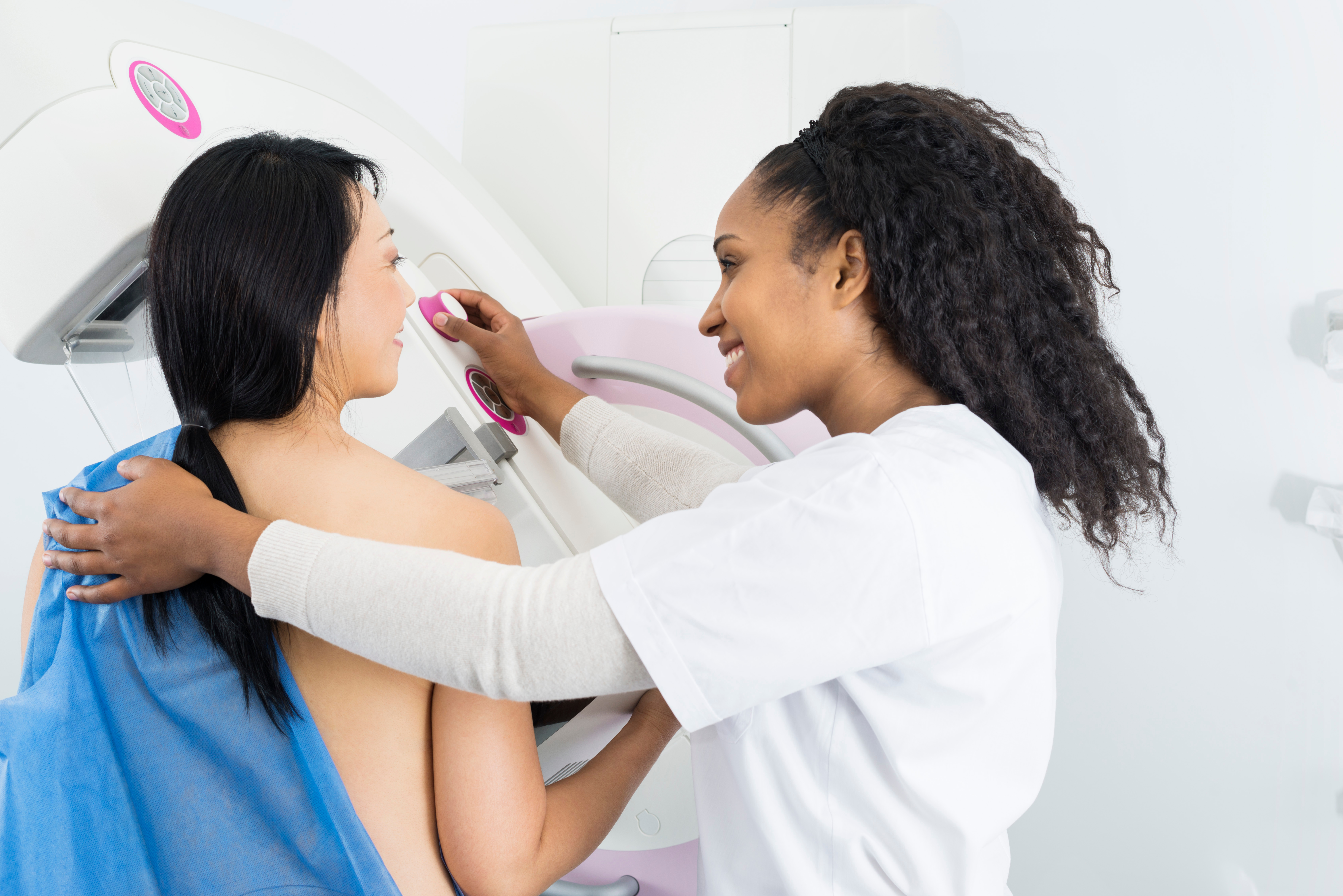
During a mammogram, the technologist will start by bringing you into a private room and explaining the next steps. You will stand in front of the mammography machine, where the technologist will guide you into position and place one breast at a time on the machine’s platform.
A second plate will press down on the breast for a few seconds while the image is taken. The technologist may reposition your breast, shoulders, arms or body to capture images from different angles.
If the technologist asks you to move slightly or takes another image, it does not necessarily mean something is wrong. They may simply need a clearer view. Your technologist may also ask you to briefly hold your breath so that they can produce a clear image.
 |
What Does a Mammogram Feel Like?
Mammogram compression can feel uncomfortable, and some people may find it painful. The amount of discomfort varies based on breast sensitivity, the positioning and other individual factors.
The pressure only lasts a few seconds for each image and is released before the technologist repositions you for the next image.
If you are worried about discomfort, tell your technologist before the exam begins. You can also speak up at any point if the pressure feels too intense, you are having difficulty holding a position or you need a moment to reset.
Why Does Compression Matter During a Mammogram?
Compression spreads the breast tissue into a thinner, more even layer. This reduces overlapping tissue and makes it easier for the radiologist to see small changes that may otherwise be difficult to identify.
Compression also holds the breast still, which helps prevent blurred images and can reduce the need to repeat positions.
Although compression may be uncomfortable, it is brief and helps create clear images that give you and your care team a better understanding of your breast health.
What Happens After a Mammogram?
After the images are taken, you may be asked to wait briefly while the technologist checks their quality. This does not mean the technologist is interpreting the mammogram. A radiologist, a doctor trained to read medical images, will prepare the results.
The timing and method for receiving results can vary by imaging center. Therefore, it’s best to ask your technologist when you should expect to hear back and how the results will be delivered. If you do not receive your results within the expected time frame, contact the imaging center or your healthcare provider.
Some patients may be asked to return for more images. If that is you, don’t worry right away. A callback does not automatically mean breast cancer was found — the radiologist may simply need a clearer image, a different angle or a closer look.
How Long Does a Mammogram Take?
Exam times may vary depending on the individual and the imaging center. However, at CommonSpirit, typical exam times are as follows:
- About 25 minutes for a screening mammogram, a routine exam for people who do not have breast symptoms
- About 45 minutes for a diagnostic mammogram, a more detailed exam used to evaluate a breast concern or follow up on an abnormal screening result
The images themselves are captured quickly, but the full appointment takes longer because you need time to change, review your information and be positioned for each image.
Can You Get a Mammogram if You Have Breast Implants?
Yes. Tell the imaging center about your implants when you schedule the appointment and remind your technologist before the exam. Additional images or special positioning may be needed to show as much breast tissue as possible.
Can a Mammography Technologist Provide the Results?
The technologist captures and checks the quality of the images but does not provide the final interpretation. A radiologist reviews the mammogram and sends the results according to the imaging center’s process.
What if You Feel Anxious About Your Mammogram?
Tell the technologist before the exam begins. They can explain each step before it happens and let you know what to expect from the positioning and compression. You can also ask questions or request a brief pause if you need one.
Your Next Step
Mammograms can find breast cancer early, sometimes before changes can be felt, making regular screening an important part of caring for your health.
Find an imaging center near you today to learn about available mammography services, schedule your screening and take the next step for your breast health.
Facilities and providers


For employees and providers
About CommonSpirit
- Our story
- Our leaders
- Investor resources
- News
- Health blog
- Careers We're hiring!