
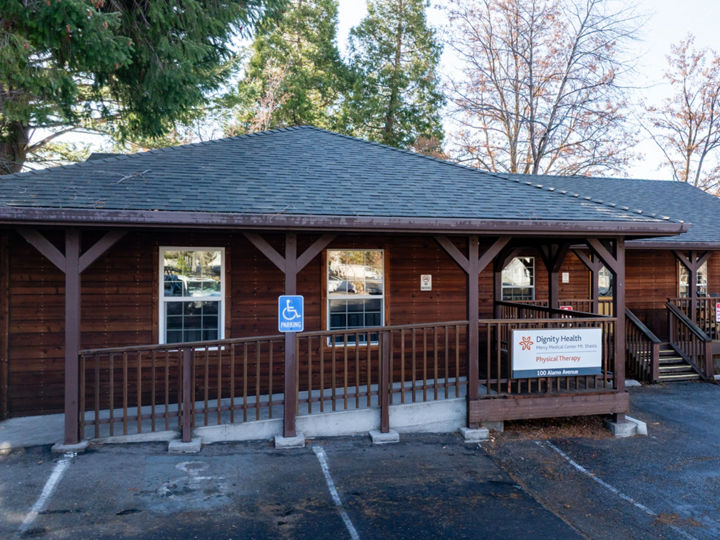

Dignity Health - Mercy Therapy Services of Weed - Mercy Medical Center Mt. Shasta
At Mercy Therapy Services of Weed, we create personalized treatment plans designed to help you return to your regular activities with renewed strength and reduced pain. We are an outpatient services clinic providing physical therapy, occupational therapy and speech therapy for patients of all ages.
If you are recovering from an injury or surgery, our experienced physical therapists can help reduce your pain, boost your stamina, and restore your strength and movement. Our occupational therapists are dedicated to helping you regain independence in your daily life, and our speech-language pathologists can provide support to improve communication and swallowing difficulties.


What we offer
-
 Occupational Therapy
Occupational therapists focus on helping you accomplish daily activities. They work with you to improve your independence and overall quality of life.
-
 Physical Therapy and Rehabilitation
Physical therapy focuses on improving your strength, mobility, flexibility and overall function. We use a variety of approaches, including personalized exercise plans and innovative technologies.
-
 Speech and Language Therapy
Our speech-language pathologists work with you to help improve difficulties with speaking, voice quality and swallowing.
Billing and insurance
We know every journey to health and wellness is different. Whether you need cost estimates, financial assistance, help paying bills or information about accepted insurance plans, we’re here to guide you and help make the process as simple and reassuring as possible.
Frequently asked questions
Common types of rehabilitation include occupational therapy to help you navigate daily tasks, physical therapy for improved strength, movement and flexibility, and speech and language therapy to help with difficulties speaking or swallowing
Other types of rehabilitation help you recover from or live with specific conditions. Some rehabilitation types include:
Cardiac rehabilitation, which supports heart health
Neurological (cognitive) rehabilitation, which helps treat brain, spinal cord and nerve conditions
- Pulmonary rehabilitation, which helps strengthen your lungs
We offer physical therapy, occupational therapy and speech therapy. At Mercy Therapy Services of Weed, our physical therapists offer hands-on treatment of soft tissues and joints. We carefully select exercises to promote healing, improve posture and movement, and prevent you from getting injured again.
Our occupational therapists help you get back to your daily activities — at work, home or school — and our speech therapists can help if you have problems with your speech and swallowing.
We help patients:
Reduce pain
Improve stamina
Restore motion, strength and coordination
Resume daily activities, work and play
Return to sports and outdoor activities
Improve speech and swallowing
Rehabilitation therapy can help people of all ages who are recovering from surgery, injury, stroke or a hospital stay. It also supports individuals managing chronic conditions that affect movement, balance, speech or daily tasks. Therapy focuses on helping patients regain confidence, rebuild strength and safely return to activities that matter most to them.
You might benefit from physical therapy if you’ve had:
Musculoskeletal injury
Orthopedic injury
Surgery, including joint replacement
Repetitive strain injury/repetitive stress injury
Traumatic injury
Occupational therapy helps you get back to your daily activities, whether that be tasks around the house, work or school. This includes tasks you do to take care of yourself. We also help you figure out adaptations you can use if you can’t do those tasks the same way anymore.
Speech therapy can help if you’ve had a stroke, or can help your child if they have issues with their speech. If you’ve had a stroke, treatment usually involves relearning how to use the muscles that you use to speak.
At your first rehabilitation visit, your care team will review your medical history, current condition and recovery goals. A physical, occupational or speech therapist will assess strength, movement, balance or communication skills, depending on your needs. Together, you’ll develop a personalized rehabilitation plan designed to support safe progress and long-term recovery. Your therapist will also explain what to expect during therapy sessions and how you can support your recovery at home.
The length of rehabilitation therapy varies based on your condition, goals and progress. Some patients need only a few weeks of therapy, while others may benefit from longer-term care. Your therapist will regularly review your progress and adjust your treatment plan to support continued improvement and safe recovery.
Referral requirements depend on your insurance plan and the type of therapy you need. Some plans allow direct access to rehabilitation therapy, while others require a referral from a physician. Our therapy team can help answer referral questions and assist with scheduling your appointment.
Most health insurance plans cover rehabilitation therapy services when they are medically necessary. Coverage may vary based on your plan, diagnosis and number of visits allowed. Our team can help verify insurance coverage, explain benefits and answer questions before you begin therapy.
Before your visit


We accept many insurance plans for outpatient rehab. Please confirm coverage ahead of your visit and bring any copayments.

Notice: "Find a Location" is provided by CommonSpirit Health as a convenience to you. The information on each participating location is submitted to CommonSpirit Health by each location and is not independently verified by CommonSpirit Health. Each location is solely responsible for the completeness and accuracy of the information listed about them. CommonSpirit Health is not responsible for any loss or damages caused by your reliance on the location information contained on Find a Location. You should telephone the location's office in advance to verify the accuracy of the information.


For employees and providers
About CommonSpirit
- Our story
- Our leaders
- Investor resources
- News
- Health blog
- Careers We're hiring!