
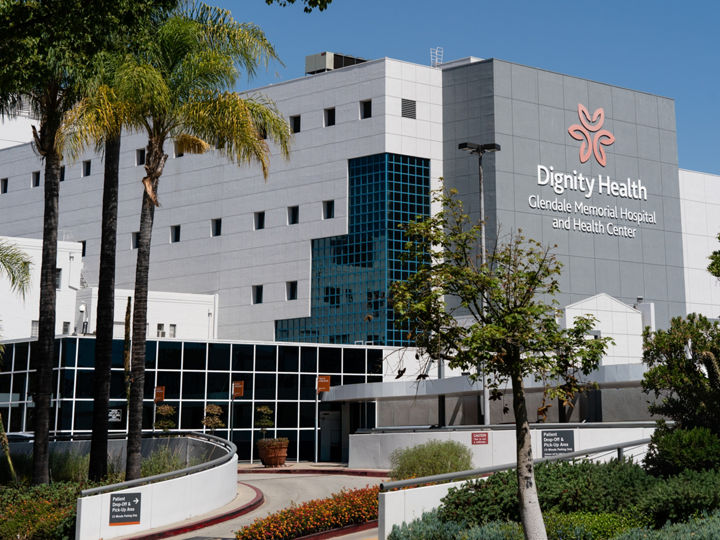

Heart Care - Dignity Health - Glendale Memorial Hospital and Health Center
At Glendale Memorial Hospital and Health Center, we are committed to providing comprehensive, high-quality heart care. This includes everything from prevention and long-term condition management to offering 24/7 emergency care. We are proud to be designated by the County of Los Angeles as a Comprehensive Stroke Center, offering advanced diagnostic and emergency treatment for neuro/cerebral stroke patients. We are also a certified STEMI Receiving Center, which means we are equipped to provide rapid treatment for a serious type of heart attack caused by a blocked artery, and have earned a 5-star rating from Healthgrades for our heart attack treatment.
Our advanced cardiac program features the latest testing and treatments, including a modern cardiac catheterization lab. Our specialists perform minimally invasive procedures to treat atrial fibrillation, including percutaneous left atrial appendage closure and transcatheter aortic valve replacement (TAVR), and help treat and manage peripheral vascular disease.


What we offer
-
 Cardiac Rehabilitation
We offer comprehensive cardiac rehabilitation services, including prevention programs, physical therapy and personalized exercise and treatment programs.
-
 Cardiology (Heart Care)
Our cardiology team specializes in heart care, offering a comprehensive range of services from screening and prevention to diagnosis, treatment and cardiac rehabilitation.
-
 Cardiothoracic Surgery
Our cardiothoracic surgeons are highly trained medical professionals who perform intricate heart surgeries using advanced technology and minimally invasive techniques.





Billing and insurance
We know every journey to health and wellness is different. Whether you need cost estimates, financial assistance, help paying bills or information about accepted insurance plans, we’re here to guide you and help make the process as simple and reassuring as possible.
Frequently asked questions
We bring a wide range of cardiac diagnostic services to the Glendale area. These tests help us evaluate your heart function, identify issues and create a treatment plan for conditions such as heart disease. Our diagnostic tests include:
Blood tests, to diagnose problems and monitor treatments
Cardiac catheterization tests, which check for problems in the coronary arteries
Electrocardiogram (EKG/ECG) tests, which check for problems with the electrical activity of your heart at rest and while working hard
Electrophysiology studies, used to help diagnose heart rhythm disorders (arrhythmias)
Nuclear imaging tests, which track how blood flows to help diagnose heart disease
Radiographic tests (X-ray, CT or MRI), to create pictures of the internal heart structures
Ultrasound tests, which create images of the heart and check blood flow
At Glendale Memorial Hospital and Health Center, we provide expert treatment for a wide range of common and complex heart and vascular conditions, including:
Arrhythmias (heart rhythm disorders)
Chest pain and angina
- Long QT syndrome
- Mitral valve prolapse
- Mitral valve regurgitation
- Mitral valve stenosis
- Pericarditis
- Peripheral artery disease
- Restrictive cardiomyopathy
- Stable angina
- Supraventricular tachycardia
- Ventricular tachycardia
Our specialists at Glendale Memorial Hospital and Health Center are highly skilled and have expertise in a comprehensive range of advanced heart and vascular procedures, which include, but are not limited to:
Aortic valve replacement (AVR), including minimally invasive transcatheter aortic valve replacement (TAVR)
Peripheral artery angioplasty and stent placement
- Ventricular assist device (VAD) surgery
Yes, Glendale Memorial Hospital and Health Center provides 24/7 care for cardiac emergencies from a highly trained, specialized team. We are a designated STEMI Receiving Center, meeting strict standards for heart attack treatment.
A STEMI (serious heart attack) happens when plaque buildup blocks blood flow to the heart. When EMS identifies a STEMI, they transport patients directly to our center for rapid, advanced treatment, helping reduce the risk of permanent heart damage.
At Glendale Memorial Hospital and Health Center, your heart and vascular care team may include one or more specialists depending on your diagnosis and treatment needs. Our skilled team focuses on building relationships with you and your family to support your long-term health.
Your care team may include:
Knowing your heart disease risk can help you take steps to support your heart health. Start with your primary care provider for an initial assessment. They may evaluate factors such as blood pressure, cholesterol, diabetes, smoking history and family history, and suggest tests like blood pressure checks, cholesterol screenings or an electrocardiogram (EKG).
A review of your health history, lifestyle habits and recommended screenings can help you better understand your heart disease risk. You can also complete our online heart health questionnaire, which guides you through a few simple questions about your health history, lifestyle and risk factors. It provides personalized insights based on your responses and may help inform conversations with your health care provider about your potential heart disease risk and next steps in care.
Heart disease happens when fatty deposits called plaque build up inside the coronary arteries of your heart. This buildup can reduce blood flow, which can result in common warning signs such as:
Chest discomfort
Fatigue or weakness
Irregular or rapid heartbeat
Shortness of breath
Swelling in the legs or feet
If you notice any of these symptoms, they may be signs of a heart attack, which is a life-threatening emergency. Call 911 right away and go to the nearest hospital emergency room.
In many cases, yes. Some health insurance plans allow you to schedule directly with a cardiology clinic. Others may require a referral from your primary care provider (PCP). If you’re unsure, please confirm your referral requirements with your insurance plan.
You can also use our Find a Doctor tool to find a primary care provider (PCP) or cardiologist who meets your health care needs.
Before your visit

Save time and help reduce stress on the day of your visit. Call our admitting team at (818) 502-7891 to preregister and get answers to your questions.

Bring a photo ID, insurance card, medication list, imaging discs and any referral forms. Arriving prepared helps our care teams review your history and can help limit delays.
Follow any fasting, medication or arrival instructions provided by your care team. Review directions ahead of time so you know where to check in once you arrive.

Notice: "Find a Location" is provided by CommonSpirit Health as a convenience to you. The information on each participating location is submitted to CommonSpirit Health by each location and is not independently verified by CommonSpirit Health. Each location is solely responsible for the completeness and accuracy of the information listed about them. CommonSpirit Health is not responsible for any loss or damages caused by your reliance on the location information contained on Find a Location. You should telephone the location's office in advance to verify the accuracy of the information.


For employees and providers
About CommonSpirit
- Our story
- Our leaders
- Investor resources
- News
- Health blog
- Careers We're hiring!